Retro Cleaning Worker Clipart Review
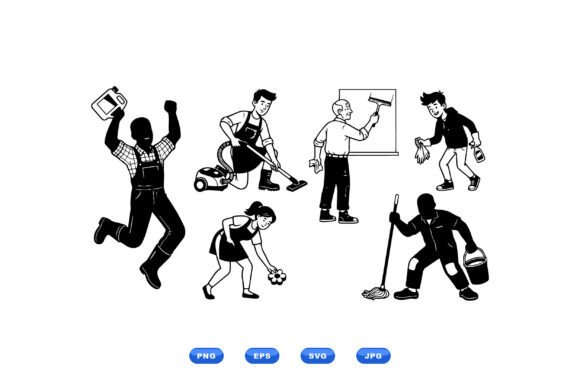
As a designer who spends half my life digitizing files and the other half troubleshooting tension issues on the sewing machine, I am always looking for graphics that translate well from screen to stitch. Retro Cleaning Worker Clipart caught my eye not just because of its nostalgic aesthetic, but because of its potential utility in today’s handmade market. The description highlights a playful line art vector featuring six diverse characters engaged in household and commercial cleaning tasks—vacuuming, mopping, polishing, planting, and painting. It is described as vibrant and useful for branding and editorial purposes. But does it hold up when converted into an embroidery project? Let’s break down how this design asset performs in real-world applications.
First Impressions: Mood and Visual Personality
The immediate appeal of Retro Cleaning Worker Clipart lies in its approachability. We live in a world where "cleaning" can sometimes feel like a chore, even when we are selling products related to home care. This design flips that narrative by injecting personality and movement into mundane tasks. The use of line art suggests a clean, modern-retro vibe that pairs beautifully with current trends in boutique branding and editorial content. For an embroidery designer, the diversity of the characters offers a strong inclusivity angle, making it a versatile choice for brands that want to signal they value representation.
The layout, featuring six distinct activities, provides excellent flexibility. You do not have to use all six figures at once. In fact, isolating specific actions—like the character planting or the one vacuuming—can create focused, punchy designs that work well on smaller merchandise items. The vibrancy mentioned in the product description hints at a color palette that will pop, which is crucial for embroidery where thread sheen can alter perceived brightness.
Real-World Application: From Digital File to Finished Product
Let’s imagine a practical scenario. You are an Etsy seller preparing a collection of custom embroidered tote bags for a spring cleaning promotion. You need something that communicates effort and freshness without being overly literal or boring. Using Retro Cleaning Worker Clipart, you could create a series of tees or totes, each highlighting a different task. The playful nature of the line art makes it perfect for custom apparel that aims to be a conversation starter rather than just a logo placement.
This design also shines in the realm of personalized gifts. Consider a new homeowner gift set. An embroidered apron featuring the "mopping" or "polishing" character, paired with a kitchen towel showing the "planting" figure, creates a cohesive narrative. It transforms a standard housewarming gift into a curated experience. The design’s versatility extends to embroidered patches as well. A small, single-character patch on a denim jacket or a cap adds a touch of whimsy that appeals to younger demographics and craft fair shoppers alike.
For commercial embroidery projects, such as branding for a local cleaning service or a boutique hotel amenity kit, this graphic strikes the right balance between professional and friendly. It avoids the stiffness of corporate clip art while maintaining enough structure to look intentional. When used in digital product previews or printable mockups, the clear lines ensure the design remains legible even at thumbnail size, which is essential for online sales conversion.
Ideal Use Cases for This Design Asset
- Tote Bag Design: Large surface area allows the full set of characters to shine, creating a busy but organized visual story.
- Sweatshirt Embroidery: The retro theme fits perfectly with casual, comfortable wear, especially for fall or winter collections.
- Baby Embroidery: Simplified versions of these characters can work on bibs or burp cloths, appealing to parents who appreciate cute, thematic decor.
- Holiday Embroidery: These themes are evergreen but can be adapted for seasonal contexts, such as spring cleaning or holiday prep.
- Embroidered Patch: Perfect for laptop sleeves, backpacks, or jean jackets, offering a durable and stylish accent.
Technical Considerations and Stitching Challenges
While the concept is strong, every designer knows that a great graphic doesn't always guarantee a great stitch-out. Here is where we need to be realistic about the technical execution of Retro Cleaning Worker Clipart.
Because the source is described as line art, the primary challenge will be converting those thin lines into stable embroidery stitches. If you are using a machine embroidery design format, you must ensure the stitch density is appropriate. Too dense, and the fabric will pucker; too sparse, and the lines may look broken or weak. I recommend testing the design on scrap fabric first to check how the satin stitch handles the curves of the characters' limbs and tools.
Thread color contrast is critical. If the original vector uses light colors on a dark background, your thread selection needs to account for the fabric texture. On textured fabrics like canvas or heavy cotton, fine details might get lost. In such cases, consider using a fill stitch for solid areas and a running stitch for finer outlines to add dimension. Also, inspect the small details closely. Do the characters' faces or tools remain recognizable at your intended hoop size? If you are working with a small hoop, you may need to simplify the digitization or crop the design to focus on one character.
Another factor is the type of stabilizer used. For stretchy fabrics like sweatshirts or baby clothes, a cut-away stabilizer is usually necessary to prevent distortion. For woven fabrics like aprons or tote bags, a tear-away might suffice, but always test first. Additionally, if you plan to use this for applique design techniques, the clean lines of the vector make it an excellent candidate for layering different fabric colors to achieve the "vibrant" look described.
Where to Exercise Caution
- Small Hoop Sizes: Avoid placing intricate multi-character layouts on very small hoops where detail loss is inevitable.
- Dark Fabric: Ensure high contrast in thread colors to maintain visibility.
- Curved Surfaces: When embroidering on caps or curved seams, monitor the tension carefully to avoid puckering.
- Frequent Washing: For items like kitchen towels or aprons, reinforce high-stress areas with additional stitching passes.
Final Verdict for Crafters and Sellers
Retro Cleaning Worker Clipart is a valuable addition to any craft business inventory. It offers a fresh take on domestic themes that resonates with modern consumers. Its strength lies in its adaptability—it can serve as a design asset for a large-scale brand campaign or a subtle detail on a small shop product. For Etsy sellers and creative entrepreneurs, the key to success will be in the presentation and the quality of the digitization.
Before committing to production, remember to review the licensing terms. Confirm whether the digital embroidery file or vector source allows for commercial use of finished goods. If you are incorporating this into a larger embroidery project, ensure that the final finished product aligns with your brand’s voice and quality standards. By paying attention to stitch density, thread choices, and fabric compatibility, you can transform this playful graphic into a profitable and beloved item for your customers.