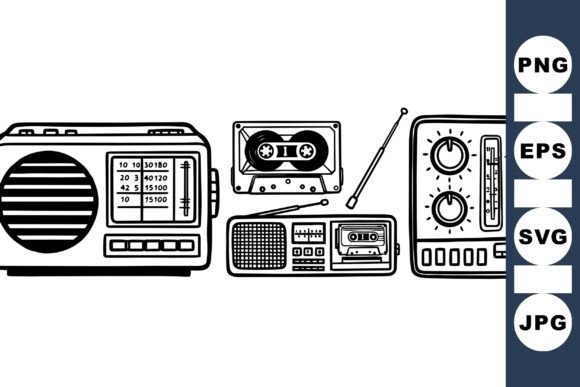
Retro Radio and Cassette Clipart
As a designer who spends half my life staring at stitch density charts and the other half worrying about whether a client’s favorite color will actually look good on fabric, I approach every new asset with a healthy dose of skepticism. We have all been there: you find a cute graphic online, download it, and then realize too late that it is either too intricate for machine embroidery or too simple to hold its own as a premium product. That is why I take the time to evaluate assets like Retro Radio and Cassette Clipart before committing them to thread. This isn’t just about looking pretty; it is about understanding how a design translates from a digital screen into a tactile, wearable, or usable object.
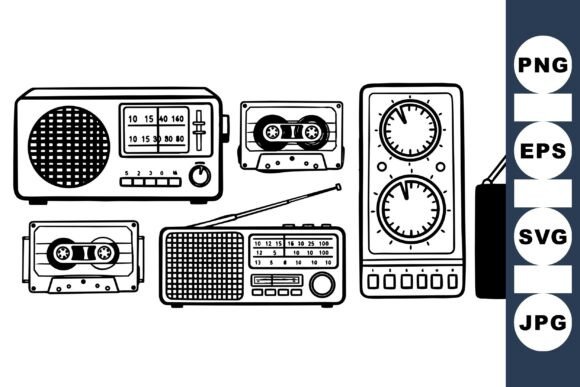
The first thing that strikes you about this collection is its mood. It taps directly into that warm, fuzzy feeling of nostalgia without being overly cluttered. The hand-drawn black and white line art style gives it an organic, sketched feel that contrasts nicely with the rigid, geometric nature of most modern vector graphics. For an embroidery project, this simplicity is a gift. It suggests a design that relies on clean lines and clear shapes rather than complex shading or gradient fills, which are notoriously difficult to replicate in thread without muddying the details.
Visual Personality and First Impressions
When I look at these vintage radios with their dials, cassette tapes, and antennas, I see a design that screams "craft business" potential. The aesthetic is inherently cozy. It feels right at home on a cotton tea towel in a rustic kitchen or stitched onto the chest of a heavyweight sweatshirt for someone who appreciates analog music. The simple graphic style ensures that the visual personality remains strong even when scaled down. Unlike overly detailed illustrations that lose their definition when digitized, these shapes have enough negative space to breathe, which is crucial for maintaining clarity during the stitching process.
The theme represents retro technology and nostalgia, but it does so in a way that feels timeless rather than dated. This is important for small shop products because trends cycle quickly. A design based on a specific pop culture moment might fade, but a design based on the universal appreciation for vintage aesthetics has a longer shelf life. For an Etsy seller or a maker selling at craft fairs, this longevity means your inventory won’t become obsolete overnight.
Real-World Application: From Screen to Stitch
Let’s talk about how this would actually perform in a real-life scenario. Imagine you are preparing a custom embroidered tote bag for a boutique client who loves vinyl records and old-school audio gear. You choose a natural canvas tote and decide to use Retro Radio and Cassette Clipart as the central motif. Because the artwork is primarily line art, it lends itself beautifully to techniques like applique or clean satin stitches. If you were to convert this into an applique design, the distinct outlines of the radio and tape would provide perfect placement guides for fabric pieces, reducing the risk of puckering.
Alternatively, if you are working with a single layer of fabric, the running stitch or fill stitch could bring out the texture of the materials. On a dark denim jacket, using a contrasting cream or gold thread for the lines would make the design pop, creating a sophisticated custom apparel piece. The versatility here is key. This isn’t just a one-trick pony; it can adapt to various garment types and accessory styles.
Consider also the potential for baby items. There is something undeniably charming about a small, stitched cassette tape on a burp cloth or a tiny radio on a muslin blanket. These items are often purchased as personalized gifts for nurseries or as unique favors for baby showers. The soft, hand-drawn quality of the clipart aligns perfectly with the gentle aesthetic parents often seek for newborn products. It avoids the harshness of sharp digital edges, making it visually soothing.
Where to Use It Carefully
However, no design is perfect for every situation. As an experienced reviewer, I must point out where caution is needed. While the simplicity is a strength, it can also be a limitation if not handled correctly. Avoid placing this design on highly textured fabrics like heavy bouclé wool or thick terry cloth unless you are using a substantial stabilizer. The fine lines of the antenna or the small details of the cassette buttons might get lost in the nap of the fabric, resulting in a blurry or indistinct image.
Similarly, be mindful of hoop size. If you attempt to shrink this design too much, you risk losing the character that makes it appealing. Tiny lettering (if added) or very thin lines might not hold up well in frequent washing. For embroidered patches or caps, ensure that the stitch density is appropriate. Too much density in a small area can cause the fabric to pucker, especially on stretchy materials like spandex blends used in athletic wear. Always test on scrap fabric first to check how the thread colors interact with your chosen material.
Impact on Product Value and Brand Consistency
Using high-quality, thematic designs like Retro Radio and Cassette Clipart elevates the perceived value of your finished product. Customers can tell the difference between a generic clip-art stamp and a thoughtfully selected design that fits a brand narrative. When you curate your design assets with care, you build trust. Buyers are more likely to engage with your shop if they sense a cohesive style. This particular set supports a vintage, artisanal brand identity, making it ideal for businesses that want to project warmth and authenticity.
Furthermore, the black and white nature of the line art offers incredible flexibility in branding. You can change the thread color to match any seasonal theme—pastels for spring, brights for summer, or deep reds and greens for holiday embroidery. This adaptability allows you to keep your printable mockups and actual inventory fresh without needing to purchase entirely new files. It maximizes the return on investment for each digital embroidery file you acquire.
Practical Designer Notes for Implementation
Before you load this design into your machine, here are some essential steps to ensure success:
- Test on Scrap Fabric: Always run a test stitch-out. Check how the stitch density holds up and if any areas need trimming or additional support.
- Check Contrast: Ensure there is enough contrast between the thread and the fabric. Black line art on black fabric will disappear, while white thread on white fabric might lack definition depending on the sheen of the yarn.
- Inspect Small Details: Zoom in on the digital file. Are the dial markings legible? Is the cassette window clear? If details are too small, consider simplifying the digitization or scaling up the design.
- Confirm Licensing: Before selling commercial embroidery items, verify the license terms. Some clipart sets are for personal use only, while others allow commercial sales of finished goods. Protect your business by knowing the rules.
- Use Proper Stabilizer: Depending on the fabric weight, use cut-away or tear-away stabilizers to prevent distortion, especially on curved surfaces like hats or bags.
In conclusion, Retro Radio and Cassette Clipart is a solid choice for designers looking to add a touch of nostalgic charm to their repertoire. Its clean lines and thematic appeal make it versatile enough for everything from tote bag design to sweatshirt embroidery. By approaching it with practical judgment and proper testing, you can create professional, marketable products that resonate with customers who appreciate the beauty of vintage aesthetics. It is a tool that, when used wisely, can significantly enhance your creative output and business offerings.