Retro Thinking Faces Clipart
As a designer who spends more time looking at stitch density charts than actual art, I approach every new embroidery file with a healthy dose of skepticism. We have all seen the clipart that looks charming on screen but turns into a muddy, unrecognizable blob once it hits the hoop. That is why evaluating Retro Thinking Faces Clipart feels less like reviewing a product and more like stress-testing a concept for real-world viability. This set of retro cartoon fifties vector graphics brings a specific nostalgic energy that could elevate a simple craft project into a boutique-quality piece, provided we understand how to translate those clean digital lines into tangible thread.
The First Impression: Mood and Visual Personality
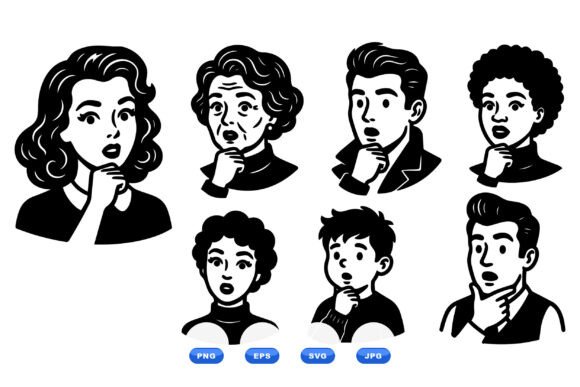
The immediate draw of this design asset is its playful yet thoughtful aesthetic. The diverse portraits featuring thinking and surprised hand-on-chin poses offer a versatile emotional range. In the world of custom apparel, emotion sells. A face that looks contemplative or pleasantly surprised invites the viewer in. From a design perspective, the clean lines of the vector format are promising. They suggest that when digitized, the shapes should hold their integrity well, avoiding the jagged edges that often plague complex facial features in smaller hoops.
This isn't just generic clipart; it has character. The retro styling gives it a timeless quality that fits perfectly with current trends in vintage-inspired handmade products. Whether you are creating items for a craft fair or updating your Etsy shop, this visual personality adds a layer of professionalism and charm that generic modern cartoons often lack. It feels curated, which is exactly what buyers look for when they want something unique for a personalized gift.
Real-World Application: From Screen to Stitch
Let’s imagine a practical scenario. You are preparing a batch of custom embroidered tote bags for a local market. You need a design that is eye-catching but not overwhelming. Placing one of these thinking faces centrally on a canvas bag creates an instant conversation starter. The pose suggests curiosity, which aligns beautifully with the idea of carrying books, art supplies, or creative tools.
However, the versatility extends far beyond tote bags. Consider a line of baby embroidery items. The soft, rounded nature of the retro style works wonderfully on onesies or burp cloths. A small, simplified version of the thinking face on a nursery pillow cover can add a whimsical touch without being too aggressive. For holiday embroidery, these designs can be repurposed as fun ornaments or tags for gifts, adding a personal touch that mass-produced items simply cannot match.
In the realm of commercial embroidery, such as branded merchandise for a small business, these faces can serve as mascots or logo accents. If a coffee shop wanted a logo featuring a barista thinking about the perfect brew, this clipart style offers a quick, recognizable shorthand. The key here is adaptation. The original vector provides the base, but the true value comes from how you adapt it—perhaps by simplifying the background details to focus entirely on the expression.
Performance on Different Fabrics
When discussing how Retro Thinking Faces Clipart performs, fabric choice is critical. On stable, medium-weight cottons like those used for sweatshirt embroidery or aprons, the design will likely shine. The smooth surface allows for crisp satin stitch outlines around the face and hands. However, textured fabrics like heavy denim or terry cloth can eat up fine details. In such cases, you might need to increase the scale of the design to ensure the facial features remain distinct.
For applique design applications, this vector set is particularly strong. The clear separation between the face and the hand makes it easy to cut out fabric pieces and stitch them down. This technique adds texture and depth, elevating the finished product from a flat print feel to a luxurious tactile experience. It is especially effective on caps or hats where space is limited but impact needs to be high.
Where Caution Is Required
No design is universally perfect, and there are pitfalls to avoid. Small hoop sizes present a significant challenge. If you attempt to fit the full detail of the thinking face into a tiny 4x4 inch hoop, you risk losing the subtlety of the expression. The hand on the chin might merge with the cheek if the stitch density is too high or the scale too small. Always test the scaling before committing to a final run.
Dark fabrics require careful consideration of thread colors. While the retro style lends itself to bold palettes, ensuring contrast is vital. A light pastel face on a black hoodie might get lost unless you use a dense underlay or a contrasting border. Similarly, stretchy fabrics like jersey knits need a proper stabilizer to prevent puckering, which would distort the circular shape of the face. Without adequate support, the "thinking" pose might look warped rather than thoughtful.
Detailed corners and tiny lettering should also be scrutinized. If you plan to add text alongside the face, ensure the font size is large enough to stitch clearly. Decorative accents around the main image can sometimes clutter the design, reducing its impact. Sometimes, less is more. Letting the face breathe on a plain background often yields a more professional result than overcrowding the hoop.
Practical Designer Notes for Success
Before uploading any design to your machine, there are essential steps to guarantee quality. First, always test the design on scrap fabric that matches the weight and texture of your final project. This helps you identify potential issues with thread tension or hoop size constraints early on. Check the stitch density closely; if areas appear too sparse, the fabric might show through, making the face look incomplete.
Inspect the design in black and white mockups. This removes color distraction and helps you evaluate the composition and balance of the shapes. Does the hand on the chin visually anchor the design? Is the face centered effectively? These compositional checks are crucial for maintaining brand consistency across your craft business offerings.
Furthermore, confirm licensing terms before selling finished items. Even though this is a digital embroidery file or graphic asset, commercial use rights vary. Ensure you have the permission to sell physical goods made from these designs. This protects your reputation and avoids legal headaches. For Etsy sellers and small shop owners, clarity on usage rights is part of building trust with your customers.
Final Verdict
Retro Thinking Faces Clipart is a versatile, charming addition to any designer’s toolkit. Its strength lies in its emotional resonance and clean vector structure, which translates well to various embroidery projects when handled with care. By paying attention to fabric choices, stabilizer usage, and appropriate scaling, you can create stunning finished products that stand out in a crowded marketplace. Whether you are making personalized gifts for friends or producing boutique branding materials, this design offers a reliable foundation for creativity. Just remember: the best embroidery work comes from thoughtful preparation and a keen eye for detail. Test, refine, and then let your creativity flow.